
Ecommerce link building is the work of earning relevant editorial links to useful store assets, then connecting those assets to the category and product pages that support a customer decision. It is not a monthly order for a fixed number of backlinks. The work begins by deciding which page needs authority and why an independent publisher would cite it.
That distinction matters for online stores. A category grid may be commercially important without giving a journalist, creator, supplier or trade publication a reason to reference it. A guide, study, product test, calculator or permanent resource can provide that reason. Relevant internal links can then help people and search systems reach the associated commercial pages.
Links can support discovery and relevance, but no individual backlink guarantees a ranking, sale or AI citation. Quality depends on the linking page, its relationship to the topic, the editorial context, the destination and why the link exists.
If authority work is only one part of the problem, our ecommerce SEO services connect it to category architecture, technical fixes, content and measurement.
Use the target–reason–route model
Before choosing a tactic, answer three questions.
- Target: Which page or page group needs stronger external support?
- Reason: What makes that page worth citing for an audience outside your store?
- Route: If the most linkable asset is informational, how will it connect users and search systems to the relevant category or product?
This model prevents two common failures. The first is pitching a purely transactional page that offers no independent reference value. The second is earning links to a blog post that sits several clicks away from the products it is supposed to support.
Suppose a cookware store wants better visibility for cast-iron cookware. The category page is the commercial target. A maintained comparison of seasoning methods, based on a documented test, may be the citation reason. Links from that comparison to the cast-iron category and relevant products create the route. The external citation and internal path do different jobs; both need to be deliberate.
Not sure which page deserves authority?
Request a focused ecommerce authority review.
Share your store, priority category and current acquisition approach. We will identify the target, citation reason and internal route to inspect first.
- Target-page and internal-route review
- Citation-reason and relationship controls
- Measurement tied to the supported page group
Which ecommerce page should earn the link?
Do not assume every campaign should point to the homepage or that every commercial query needs a direct category backlink. Match the destination to the reason a publisher would reference it.
| Page type | When it can deserve a citation | Suitable acquisition motion | Useful internal route |
|---|---|---|---|
| Homepage or brand page | The reference is about the company, founder, brand history or a verified announcement | Unlinked mention reclamation, partner profiles, relevant association listings, company news | Major category hubs |
| Category page | The page curates a distinctive product set or contains useful original category evidence | Editorial resource outreach, supplier relationships, specialist roundups where the choice is independent | Subcategories and priority products |
| Product page | The item has genuine novelty, independently useful specifications, testing evidence or news value | Product review, expert evaluation, launch coverage, design or innovation story | Parent category and supporting evidence |
| Campaign or seasonal page | The page provides a current event, limited collection, useful promotion or timely dataset | Digital PR, local or trade press, creator coverage | Permanent category page before the campaign expires |
| Guide, research page or tool | It answers a repeatable question with evidence, utility or a reference others can reuse | Editorial outreach, digital PR, broken-reference replacement, resource inclusion | One or more closely related commercial owners |
Direct category and product links are possible, but the page still needs an editorial reason. “This page sells the item we want to rank” is a business objective, not a reason another website should cite it.
The target also needs to survive. If a campaign URL will disappear next month, decide where its internal links and any earned equity should go after the campaign ends. That decision belongs in the campaign plan, not after the page is removed.
Build citation reasons, not a list of tactics
Most link-building tactics are variations of a few underlying reasons. Organising the work by reason makes it easier to choose an approach that fits the store.
Publish evidence or utility worth referencing
Original research, maintained datasets, calculators, comparison methods, sizing tools and detailed buying resources can answer questions a product grid cannot. The asset should have a clear method, a named owner, a visible update date and a stable URL.
A “best products” article assembled from manufacturer descriptions is not original evidence. A size calculator based on a documented measurement method is useful only if the method and limitations are clear. A trend report becomes fragile when its source period is hidden or its charts cannot be checked.
Use the ecommerce content marketing guide to build the asset itself. This page owns the next decision: who has an audience that benefits from citing it, and which commercial page should the asset support?
Use relationships that already exist
Suppliers, manufacturers, distributors, trade associations, technology partners and event organisers may maintain retailer, partner, stockist, member or case-study pages. A listing is appropriate when the relationship is real and the destination helps that audience.
Audit these opportunities by asking:
- Confirm that the relationship is current and verifiable.
- Does the page genuinely list comparable partners or retailers?
- Choose the brand, category or product page that best answers the visitor’s next question.
- Check whether the publisher chooses the link or a contract requires ranking credit.
Do not create a reciprocal partner directory only to exchange links at scale. A useful partner page explains the relationship for customers; an excessive exchange exists mainly for search manipulation.
Reclaim existing editorial demand
An unlinked brand mention, an old company URL, a reused original image or a broken citation can reveal an existing editorial reason. The outreach is then about correcting or improving a reference rather than manufacturing one.
Check whether the current page really deserves the link. If a publication mentions an old product that no longer exists, redirecting every request to the homepage may be a poor answer. A maintained successor page, archive, comparison or discontinued-product explanation can serve the reader better.
Broken-reference replacement follows the same test. The replacement must answer the reason the old source was cited. Matching a keyword in the anchor is not enough.
Create news that is useful beyond the brand
Digital PR can earn coverage when a launch, dataset, experiment, partnership or expert response is genuinely relevant to the publication’s audience. The strongest campaign has a verifiable claim, a clear spokesperson, supporting material and a page that remains useful after outreach ends.
Avoid manufacturing controversy, publishing empty press releases or treating syndication as proof of editorial endorsement. Coverage volume is not a substitute for relevance, and a press mention is not automatically a crawlable link.
Handle reviews, affiliates and paid relationships correctly
Product review outreach sits between editorial coverage and advertising, with a separate consumer-disclosure duty. The relationship must be clear before the email is sent.
| Relationship | What the brand provides | Editorial control | Search/disclosure treatment to verify |
|---|---|---|---|
| Independent editorial review | Access to accurate product facts; the publisher chooses whether and how to cover it | Publisher retains the decision and opinion | Record any material connection and follow the publisher’s disclosure process |
| Gifted or discounted product | Product or benefit has material value | A positive review or ranking link must not be required | India disclosure and Google link-qualification controls apply |
| Affiliate relationship | Commission may be earned from referred sales | Publisher controls its content within the agreement | Commercial relationship should be disclosed; outbound links need the publisher’s appropriate qualification |
| Paid placement or advertorial | Money or another benefit buys placement | Placement is commercial | Paid links should be qualified, normally with rel="sponsored"; ad disclosure must be clear |
| Customer or community content | Users submit reviews, comments or posts | Store hosts third-party submissions | Moderate abuse and use an appropriate UGC link treatment where links are allowed |
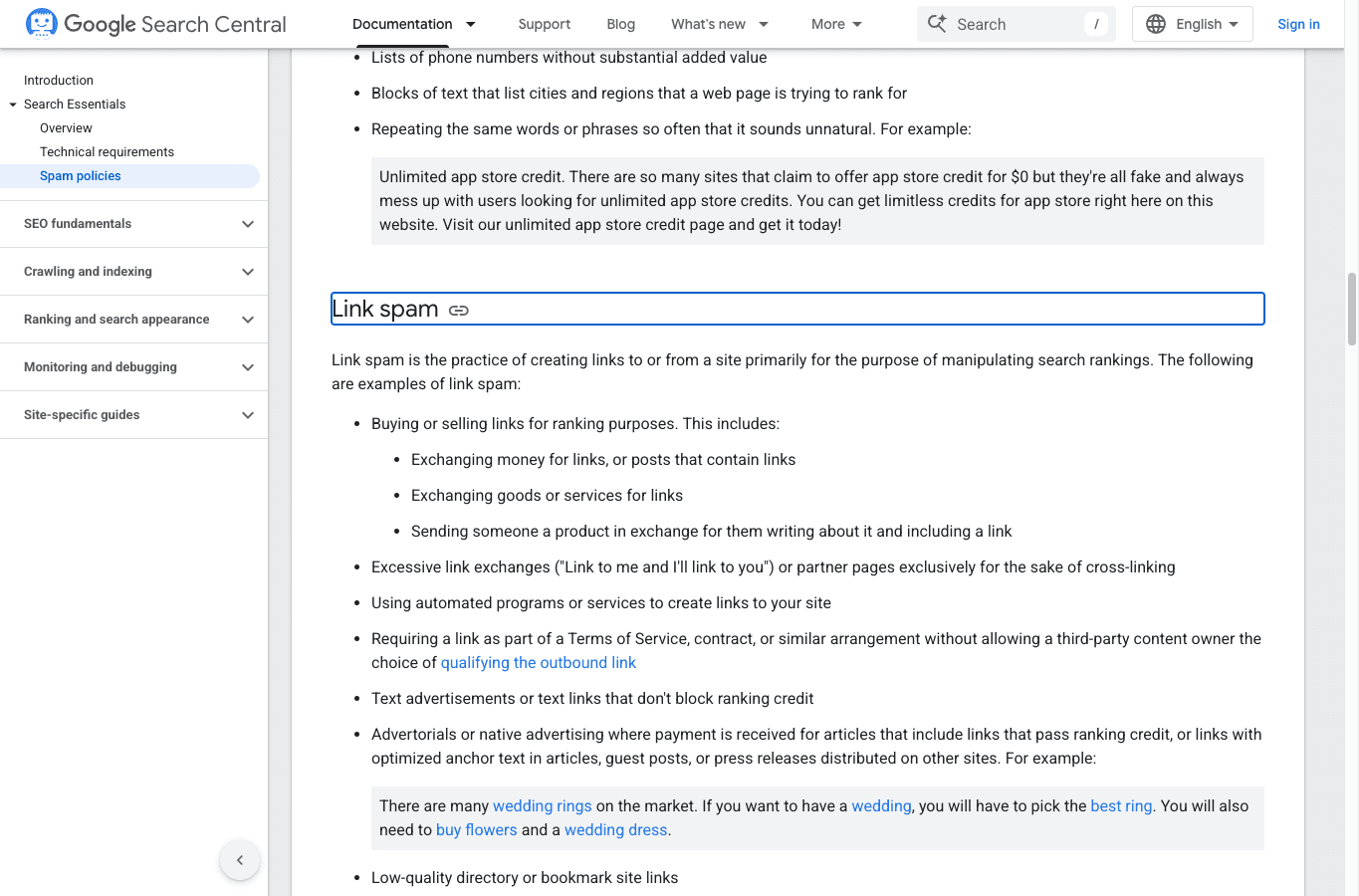
Google’s spam policies list exchanging money, goods or services for links as link spam when the arrangement is used for ranking purposes. They also include advertorial links that pass ranking credit and automated link creation. A product sample does not become safe because no invoice was issued.
Google’s outbound-link guidance distinguishes regular editorial links from paid, sponsored and user-generated relationships. rel="sponsored" is the preferred qualification for advertisements or paid placements; nofollow remains acceptable for that purpose. rel="ugc" identifies links in user-generated content.
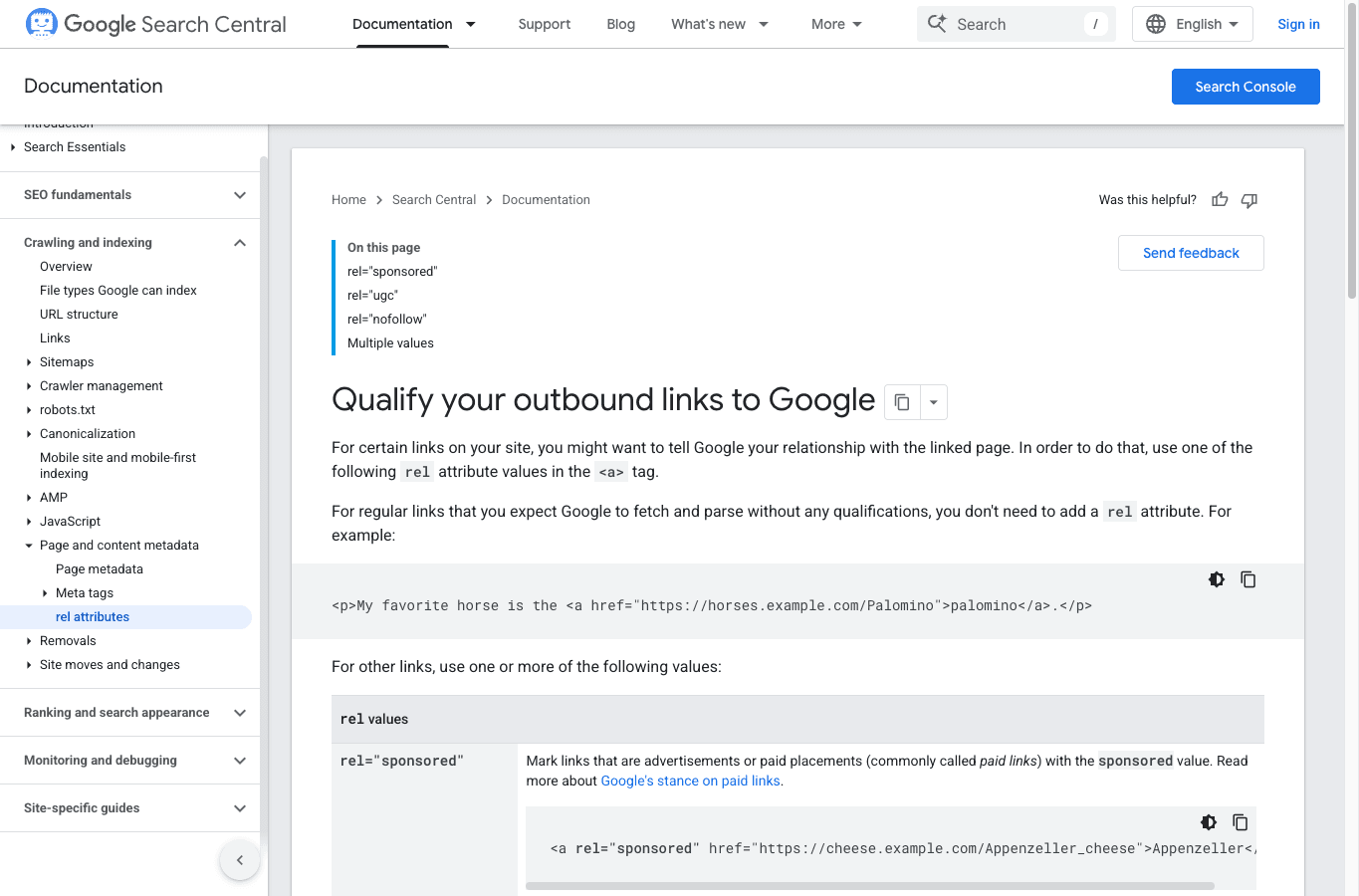
These attributes describe the publisher’s relationship with the destination. They are not a tool for the ecommerce store to demand a ranking outcome.
Route earned authority into the catalogue
A cited guide or research page should not become an isolated traffic island. Map each linkable asset to the commercial decision it supports.
For every asset, record:
- the primary category or product group it supports;
- the customer question answered before the commercial decision;
- the internal link and its surrounding context;
- whether the destination is crawlable and canonical;
- whether the route works on mobile and in rendered HTML; and
- what happens when an item, campaign or category changes.
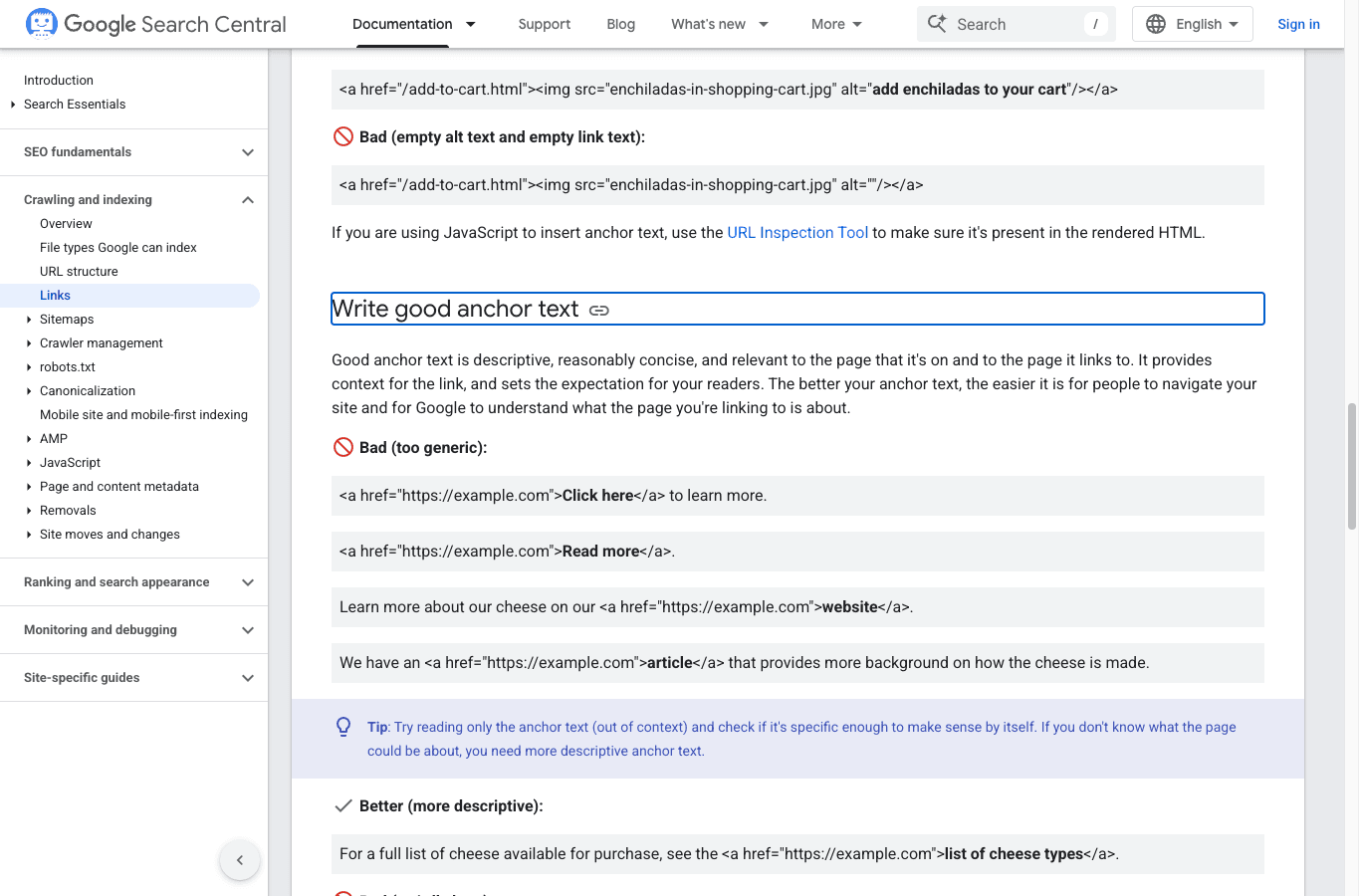
Google recommends crawlable <a> links with href values and descriptive, concise anchor text. The surrounding sentence also contributes context. That is a stronger standard than “read more” repeated across unrelated destinations, and it does not require a forced exact-match anchor.
Use the ecommerce internal linking guide for template and architecture depth. At campaign level, the rule is straightforward: the cited asset should link to the next useful commercial owner, not to every product in the store.
Platform implementation can change where those routes live. Stores that need hands-on support can review our Shopify SEO services or WooCommerce SEO services without turning this guide into a platform tutorial.
Apply India and D2C disclosure controls
India-focused D2C brands often work with creators through free products, discounts, affiliate codes, event access or paid collaborations. Those relationships affect both advertising disclosure and link treatment.
ASCI’s influencer guidelines treat a material connection broadly. It can include money, free or discounted products, gifts, trips, media barter and other value. When a material connection exists, the advertisement needs a clear disclosure that is hard to miss. The brand and influencer both have responsibilities under the guidance.
Build the control into the campaign brief:
- Record what the creator or publisher receives.
- State that honest editorial opinion is not conditional on a positive result.
- Specify the disclosure required for the format and language.
- Ask the publisher to apply the appropriate link attribute for a commercial relationship.
- Keep the final live URL, disclosure and link attribute in the campaign record.
This is operational guidance, not legal advice. Regulated categories and technical product claims may require additional review.
Judge a link without reducing quality to one metric
Domain-level scores can help sort a prospect list, but they do not decide whether a specific link is useful. Review the actual page and relationship.
| Check | Useful question | Warning sign |
|---|---|---|
| Audience relevance | Would this page’s readers reasonably need the destination? | The site publishes unrelated topics for placements |
| Editorial reason | Why would the publisher cite this exact page? | The only reason is a target keyword or payment |
| Page quality | Is the linking page maintained, readable and attributable? | Thin, templated or mass-produced placement pages |
| Link context | Does the sentence set an accurate expectation? | Forced commercial anchor or links chained without context |
| Relationship | Is payment, a product, commission or UGC involved? | Commercial value is hidden or left undocumented |
| Destination | Does the target resolve to a useful canonical page that will remain available? | Redirect chain, expired campaign or irrelevant homepage |
| Portfolio pattern | Does the placement fit normal brand and editorial activity? | Repeated anchors, networks, copied articles or sudden irrelevant bursts |
Do not approve a placement because its authority score crosses a fixed threshold. A smaller specialist publication can be more relevant than a large general site. The decision needs page-level evidence.
Measure the work from placement to commercial page
Use a link register that connects acquisition activity to the intended page group. At minimum, record:
- referring page and domain;
- live destination URL;
- date discovered and last verified;
- acquisition reason and relationship type;
- link attribute and anchor text;
- whether the referring page and destination are accessible;
- supported category, product group or campaign; and
- relevant search and business observations before and after the placement.
Count unique referring pages and domains, but do not stop there. Review whether the link points to the intended asset, whether the internal route exists, and whether the target page’s impressions, clicks or qualified organic sessions change in a defined comparison window.
Correlation is not proof that one link caused a ranking or sale. Content changes, inventory, seasonality, technical releases and other links may occur in the same period. Document those events instead of assigning automatic revenue to every backlink.
A 30-day operating sequence
This sequence describes the work to complete in the first month. It does not promise 30-day rankings.
Days 1–5: choose targets and baselines
- Select one category or product group rather than the entire store.
- Record current relevant queries, landing pages and referring domains.
- Inspect the target page’s content, canonical state and internal links.
- Identify existing brand mentions and commercial relationships, then inventory reusable evidence.
Days 6–12: define citation reasons
- Match each target to a guide, dataset, tool, product proof or relationship.
- Decide whether an existing page can be improved or a new asset is justified.
- Assign an owner, source method, update date and commercial route.
- Remove ideas that depend on hidden compensation or a forced anchor.
Days 13–20: build and verify the asset
- Publish the evidence, method, author and limitations.
- Add crawlable internal links to the correct commercial owners.
- Test desktop and mobile rendering.
- Prepare outreach material that explains audience value, not ranking benefit.
Days 21–30: run outreach and verify live placements
- Prioritise publishers and partners by audience fit and existing relationship.
- Personalise each pitch.
- Record responses, live placements, disclosures and link attributes.
- Review the destination and internal route after each link goes live.
The next cycle should learn from response quality and page fit. It should not simply increase email volume.
Do links help AI visibility?
Independent mentions and citations can help establish that a brand, product or dataset exists beyond its own website. That broader corroboration may support how search and AI systems understand an entity.
There is no dependable formula that converts a backlink into a ChatGPT, Google AI or other platform citation. Measure visible citations separately from organic rankings, and keep the underlying evidence accessible, current and attributable.
Ecommerce link-building mistakes to avoid
- Buying unqualified links for ranking credit.
- Requiring a positive review or followed link in exchange for a product.
- Publishing identical guest articles across unrelated websites.
- Choosing prospects from a domain score without reviewing the linking page.
- Forcing exact-match commercial anchor text.
- Sending every earned link to the homepage instead of matching the destination to the publisher’s reason for citing it.
- Building assets with no route to categories or products.
- Hiding affiliate, gifted-product or paid relationships.
- Leaving links pointed at expired campaigns or discontinued products.
- Reporting every ranking change as revenue caused by one backlink.
Use the off-page ecommerce SEO guide when the problem includes reputation, mentions and other external signals beyond links. Use the ecommerce SEO strategy when the store must decide whether authority is the right bottleneck to address now.
Ecommerce link building FAQs
Is ecommerce link building still important?
Links remain one way Google discovers pages and understands relevance. Their usefulness depends on the linking page, context, relationship and destination. Link acquisition cannot repair an inaccessible, duplicated or unhelpful target page by itself.
Can an ecommerce brand buy backlinks safely?
Paying for placement changes the relationship. Google asks publishers to qualify paid placements, and its spam policies prohibit buying links for ranking purposes. Treat advertising as advertising, disclose it, and do not require ranking credit as part of the deal.
Can product reviews earn links?
Yes, when a publisher independently decides the product is useful to cover and the page helps its audience. If the brand supplies money, a free product, a discount or another benefit, record the material connection and follow the applicable disclosure and link-qualification rules.
Should I build links to category or product pages?
Build a direct link when that page has a real citation reason. Otherwise, earn the link to a useful guide, study, tool or campaign and connect it to the relevant category or product through descriptive internal links. Avoid routing every asset to every commercial page.
How do I measure ecommerce link building?
Track the live referring page, destination, relationship, link attribute and supported commercial page. Then observe target-page search visibility and qualified organic behaviour in a defined comparison window while recording other changes that could affect the result.