Ecommerce Keyword Research: Map Keywords to Revenue Across the Full Buyer Journey
Ecommerce keyword research maps verified search demand to the page that can satisfy it. The work starts with the catalogue and customer decision, then uses India keyword data, live result types, internal ownership and commercial evidence to choose a category, collection, product page, guide or glossary entry.

Table of Contents
1. The Four Intent Types and How They Map to Revenue
Every search query belongs to one of four intent categories: informational, commercial investigation, transactional, and navigational. Navigational searches ("Nike official store," "ASOS login") are brand-specific and should normally be owned by the named brand. Use the live result mix and catalogue relationship to decide whether the other query classes need a PLP, PDP, guide, comparison or definition.
Informational intent: capturing buyers before they know what they want
Informational queries are questions. "How long do running shoes last?" "What protein powder is best for women?" "How to choose a mattress for back pain." These searchers are not ready to buy today, but they are in the research phase of a purchase that will happen within days or weeks. The store that answers their question and then presents a relevant product recommendation owns the consideration stage.
A more specific query can reveal the product attribute or decision a broad head term hides. Do not infer conversion rate or purchase timing from query length alone. Measure each intent and landing-page group against the store's own search, engagement and order evidence.
Commercial investigation intent: the comparison stage
Commercial investigation keywords indicate a buyer who has narrowed their options and is now comparing. "Best running shoes for flat feet," "running shoes vs walking shoes," "standing desk reviews," "alternatives to Dyson vacuum." These searches should land on dedicated comparison content, best-of round-up posts, or well-structured category pages with faceted filtering (price, size, brand, rating) - not product detail pages. A buyer searching "best standing desk under $500" wants to see options, not a single product.
Commercial investigation content requires editorial judgment and specificity. Generic "best X" lists that just describe your own products do not rank. The content needs to actually help the buyer compare options, including honest trade-offs.
Transactional intent: the conversion keywords
Transactional keywords signal purchase readiness. "Buy Brooks Ghost 15," "Casper mattress discount code," "ergonomic chair under $300 buy." These map to product detail pages (PDPs) and product listing pages (PLPs). Competition is highest here because every competitor knows these keywords. Win transactional keywords by having the strongest product pages - complete specifications, authentic reviews, strong schema markup, fast load times, and internal link equity from the rest of your content.
Keyword Intent to Page Type Mapping
| Intent Type | Example Keywords | Page Type | Conversion Timeline |
|---|---|---|---|
| Informational | "how to choose running shoes" | Blog / Guide | Days to weeks |
| Commercial | "best running shoes for flat feet" | Comparison / PLP | Hours to days |
| Transactional | "buy Brooks Ghost 16 women's" | Product Detail Page | Minutes to hours |
| Navigational | "Nike running shoes site" | Brand / Homepage | Immediate |
2. Keyword Discovery: Building Your Seed List
Keyword research starts with a seed list - a set of core terms that describe your products and categories. From those seeds, you expand outward using tools and data sources. The quality of your final keyword list is largely determined by the quality of your seed list, so do not rush this step.
The four sources for a strong seed list
1. Your own product catalog. Pull every product name, category name, brand name, and product attribute from your store. A mattress store's seeds include: mattress, memory foam, latex, hybrid, innerspring, queen mattress, king mattress, mattress in a box, bed frame, pillow top. Every word that describes what you sell is a potential seed.
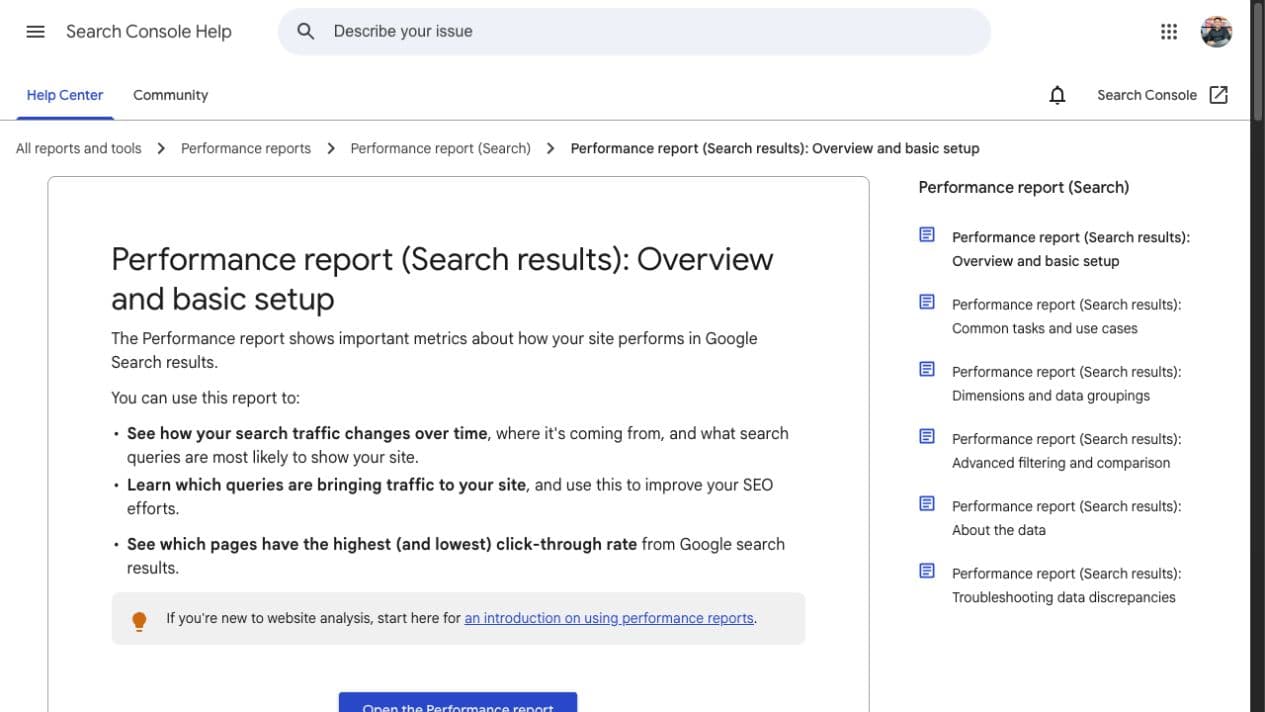
2. Google Search Console. Review query and landing-page groups with impressions, then compare clicks, position, device and period under the same filters. Existing visibility can reveal language and ownership conflicts that a third-party tool misses. Export the evidence monthly and preserve the date, country and filters used before adding a query to the keyword map.
3. Customer language. Read your product reviews, customer service emails, live chat transcripts, and internal site search queries. Buyers describe products in ways that are different from how brands describe them. Language such as "sofa that does not smell like chemicals" can reveal a concern the catalogue team has not named. Verify whether India demand exists, whether the business can support the relevant material or emissions claims, and whether a guide, collection or product page should own the decision.
4. Competitor titles and headings. Crawl your top 5 competitors' store using Screaming Frog. Export their page titles and H1 tags. The keywords embedded in their top-ranking page titles are your competitor's keyword strategy made visible.
3. The India Keyword Evidence Stack
No single metric decides whether a page should exist. Use the same evidence stack for every proposed URL, preserve the market and collection date, and keep the raw task or export so the decision can be refreshed.
DataForSEO: India demand and result-page evidence
Use DataForSEO with India as the location and the intended language and device recorded. Collect the primary query and its close variants, estimated search demand, current organic results, result types and questions. Store the task ID and date with the keyword-to-page map. Search volume and difficulty remain third-party estimates; the live result composition is what validates page type and intent.
Search Console and site data: observed demand
Search Console shows the queries and landing pages Google already associates with your site. Use it to find emerging demand, multiple URLs receiving impressions for the same intent, and pages whose query mix no longer matches their owner. Add site-search terms, customer-service questions, inventory and conversion data so the map represents the store rather than a generic keyword database.
Google Trends and live results: direction and context
Google Trends is useful for relative direction, regional interest and recurring seasonality; it is not an absolute search-volume source. Inspect the current Google India results to confirm whether the query expects a category, product, service, guide, comparison, video or mixed response. Save the SERP snapshot because intent and result features can change between refreshes.
What Each Evidence Source Decides
| Source | Use it for | Do not treat it as | Record |
|---|---|---|---|
| DataForSEO India | Demand estimates and SERP capture | A traffic or ranking promise | Location, language, device, date, task ID |
| Google Search Console | Observed queries, pages, clicks and impressions | The market outside your verified property | Property, filters and date range |
| Google Trends | Direction, geography and seasonality | Absolute search volume | India, period, category and search type |
| Live Google India SERP | Intent, page type and result features | A permanent result pattern | Query, timestamp and captured URLs |
4. Intent Classification at Scale
Manually classifying intent for 10,000 keywords is not scalable. The good news: intent classification follows predictable patterns based on keyword modifiers and SERP composition. Train yourself to recognize the signals, then use spreadsheet formulas to automate the classification.
Modifier-based classification
Transactional modifiers: buy, shop, order, cheap, discount, coupon, deal, free shipping, price, online. Commercial modifiers: best, top, review, vs, alternative, compare, comparison. Informational modifiers: how to, what is, why, when, does, can, should, guide, tips, tutorial. Build an Excel or Google Sheets formula that scans each keyword for these modifier groups and auto-classifies intent. Modifier rules can provide a first-pass classification, but every important query still needs a live India SERP review. Record mixed result types and ambiguous intent instead of forcing them into one automated label.
SERP composition as the ground truth
When modifier-based classification is ambiguous, check the SERP. Google's ranking decisions reveal intent better than any formula. If the top 10 results for "standing desk" are all product listing pages and ecommerce category pages, the intent is transactional. If the top results include buying guides, comparison articles, and review sites, the intent is commercial investigation. If the top results are all blog posts and Wikipedia-style articles, the intent is informational. Rank a page type that matches the dominant SERP composition.
This matters because targeting the wrong page type is a losing strategy regardless of content quality. You cannot outrank a product listing page with a blog post for a transactional keyword, even if your blog post is technically better than the PLP's content. Google has already decided what type of page should rank.
5. Mapping Keywords to Page Types
Keyword mapping is the process of assigning each target keyword to a specific page on your store. Every page gets one primary keyword (the main ranking target) and 3-5 secondary keywords (related terms the page also targets). This prevents keyword cannibalization - multiple pages competing for the same keyword - and ensures every page has a clear SEO purpose.
The four ecommerce page types and their keyword fit
Product Detail Pages (PDPs) target transactional and high-specificity commercial keywords. Primary keyword: the specific product name plus the highest-volume purchase-intent modifier. A Nike Air Max 270 product page targets "Nike Air Max 270" as primary and "Nike Air Max 270 men's," "Air Max 270 black," and "Air Max 270 size guide" as secondaries.
Product Listing Pages (PLPs) / Category Pages target broad transactional and commercial investigation keywords. A "Men's Running Shoes" category page targets "men's running shoes" as primary, with "running shoes for men," "best men's running shoes," and "men's training shoes" as secondaries. The category page SEO guide explains how to evaluate catalogue coverage, page ownership, indexability, content and internal relationships without promising a universal traffic lift.
Blog Posts and Guides target informational and commercial investigation keywords. The guide should connect to relevant product pages via internal links and contextual CTAs - our ecommerce content marketing guide explains how to build this connection systematically. A guide titled "How to Choose Running Shoes for Overpronation" should link to the stability running shoes category and include a specific product recommendation within the content.
Comparison and Round-Up Pages target commercial investigation keywords at scale. "Best running shoes for plantar fasciitis," "most durable running shoes under $100," "Hoka vs Brooks running shoes." These pages rank for high-intent keywords and drive significant revenue when they include strong internal links to the featured products.
Building the keyword map spreadsheet
Your keyword map is a spreadsheet with these columns: URL, Page Type, Primary Keyword, Primary Keyword Volume, Primary Keyword Difficulty, Secondary Keywords (3-5), Intent Type, Priority Score, Status (planned / in progress / published / optimized). Keep this as a living document - update it as you publish new pages, discover new keyword opportunities, and track ranking improvements.
6. Long-Tail vs Head Terms: The Real Strategy
Long-tail queries are not automatically easier or more valuable. Their usefulness comes from specificity: a query can expose a product, attribute, compatibility condition, audience or decision stage. Confirm the current result set, demand estimate and catalogue support before choosing an owner.
The actual distribution of search volume in ecommerce
Demand distribution differs by category and data source. Preserve the India location, collection date and provider for head, mid-tail and specific query groups. Compare the groups as a set so a low-volume variant is not mistaken for a separate page opportunity when it belongs to the same product or collection.
The long-tail mistake that wastes your content budget
Targeting long-tail keywords that are too specific to justify dedicated pages burns your content budget. A standalone page needs distinct intent, enough customer value and an owner that the catalogue can maintain. Cluster semantically close queries when the same page can answer them without changing purpose. Review both individual volume and the dated estimated traffic of the ranking page, while remembering that third-party traffic potential is an estimate rather than a forecast for the new URL.
When to target head terms directly
Assign broad commercial terms to the page that represents the entity and fulfils the current result pattern, often a homepage or category owner. Do not avoid a relevant head term solely because a difficulty metric is high, and do not create a guide when Google India primarily returns commercial owners. Build the page graph around catalogue relationships and measure progress without converting difficulty into a ranking deadline.
7. Competitor Keyword Gap Analysis
Competitor coverage can reveal vocabulary, page types and decisions missing from your map. It is a discovery input, not proof that the same URL belongs on your store. Validate each candidate against India demand, the live result pattern, catalogue relevance and existing page ownership.
The step-by-step gap analysis process
Start with the domains and ranking URLs returned in the dated DataForSEO India capture. Group recurring pages by query and page type, compare the themes with your Search Console and URL inventory, and flag only the decisions for which your site lacks a clear owner.
Apply the project's minimum demand rule, but do not use volume alone. Exclude irrelevant branded demand, merge variants with the same result pattern, and retain zero-volume terms only when first-party evidence or a necessary entity relationship justifies them. Record the reason for every keep, merge and reject decision.
Include editorial competitors in the result set
Include retailers, marketplaces, publishers, videos and community results when they appear. Their presence helps classify the task and evidence format. A publisher ranking for a query does not automatically mean your store should publish the same article; the page still needs a defensible decision, original evidence and a clear relationship to the catalogue.
Reverse-engineering competitor category structures
Crawl your top competitors' stores and extract their category URL structure. Categories that exist on multiple competitors' stores represent validated demand. If three competing stores all have a "/shoes/wide-width/" subcategory, and you do not, you are missing a keyword cluster that has proven commercial intent. Build the equivalent category on your store with unique content, proper keyword targeting, and filterable products.
8. Seasonal Keyword Planning
Seasonal keywords have time-sensitive demand curves. Use several years of India trend data and the current result set to work backwards from the expected rise in interest. Research, approvals, production, crawling and indexation all need lead time, but no fixed number of weeks guarantees ranking.
Mapping seasonal demand with Google Trends
Open Google Trends and search for your seasonal keywords. Switch the time range to "Past 5 years" to see the full seasonal pattern across multiple cycles. Note the exact weeks when search volume starts rising, peaks, and falls. Set the production date from that observed curve and the site's own publishing and indexation history rather than a universal deadline.
Record the observed start, peak and decline for each seasonal query set. Keep the URL stable when the intent recurs, and schedule refresh work early enough for product checks, editorial review and crawling.
Evergreen URLs for recurring seasonal content
Use a single evergreen URL for each recurring seasonal keyword set and update the content each year. "/blog/diwali-decoration-ideas" should exist as a permanent URL that gets updated with fresh photos, new product recommendations, availability and current-year evidence before the demand period. Do not create a dated replacement when the intent is unchanged. A stable owner preserves its history and references, while dated archives may still be appropriate when the event or record itself is meaningfully different.
9. Prioritizing Keywords by Revenue Potential
Search volume is one estimated input, not a priority decision. Combine it with result-page fit, existing visibility, catalogue relevance, inventory, margin, evidence burden, internal links and maintenance capacity.
The keyword revenue potential formula
If the team models opportunity, keep every assumption visible: third-party volume, expected position, CTR source, conversion cohort, AOV, margin and confidence. Run scenarios instead of presenting one assumed ranking and CTR as a forecast.
Scenario fields to store

market: India
volume_source: named provider and collection date
target_page: one canonical URL
serp_fit: observed result types and leading owners
commercial_input: product/category value and inventory status
ctr_scenarios: low / middle / high with source
conversion_scenarios: matching landing-page cohort
margin_basis: named contribution level
confidence: evidence note, not a ranking probability claim
Score the approved opportunities with the same fields, then review the result with the merchandising and content owners. Once pages are live, use a page-level tracking system to compare the scenario with observed impressions, clicks and commercial outcomes. Re-prioritise when demand, inventory or ownership changes.
Adjusting for keyword difficulty and ranking timeline
Keyword difficulty is a third-party estimate, not a timeline. Review the actual ranking pages, content type, domain relationships, backlinks, freshness and your current position. Use those observations as a confidence note rather than converting difficulty into promised months to rank.
Prioritise the highest-evidence opportunities the team can execute and maintain. Limit the active queue by research, writing, engineering and review capacity, then compare the recorded scenario with observed results before expanding the map.
Ecommerce Keyword Research Checklist
- ☐ Build seed keyword list from: product catalog, Google Search Console, customer reviews, competitor titles
- ☐ Expand seeds with DataForSEO India, recorded SERP questions, site search and customer language
- ☐ Export and organize all keywords in a master spreadsheet with volume, difficulty, and URL columns
- ☐ Classify intent for each keyword: informational, commercial, or transactional (use modifier formulas + SERP check)
- ☐ Run keyword gap analysis against top 3-5 competitors - filter to multi-competitor gaps
- ☐ Map each keyword to a specific page type: PDP, PLP, blog post, comparison page
- ☐ Assign one primary keyword per page and 3-5 secondary keywords
- ☐ Check for cannibalization: no two pages share the same primary keyword
- ☐ Model opportunity with labelled volume, CTR, conversion, AOV and margin scenarios
- ☐ Prioritise with SERP difficulty evidence and an explicit confidence note, not a ranking deadline
- ☐ Map seasonal demand and back-plan publication from the observed curve and production lead time
- ☐ Set evergreen URLs for recurring seasonal content - update yearly instead of creating new pages
FAQ
Ecommerce Keyword Research FAQs
Keyword Research Is Strategy, Not a Spreadsheet Exercise
The stores winning at organic search are not the ones with the biggest keyword lists. They are the ones who mapped those keywords to a deliberate content strategy, connected every informational article to a product, and built internal link architecture that flows authority from high-traffic content pages to high-conversion product pages.
Start with existing organic data. Group queries by the landing page and customer decision, then inspect pages whose impressions, clicks or ownership changed under comparable filters. Move to gap analysis only after current owners are understood; a competitor keyword is not automatically a page the store should copy.
Keyword research is a maintained dataset, not a one-time deliverable. Review priority pages monthly and rerun the deeper SERP and corpus process when intent, ranking-page types, demand, competitors or the catalogue materially change.
Want a Done-For-You Keyword Map for Your Store?
I build full-funnel keyword maps for ecommerce stores — from seed discovery through intent classification, competitor gap analysis, page mapping, and revenue-weighted prioritization. You get a dated content and optimization roadmap with page owners, evidence, priorities and transparent commercial scenarios for each initiative.
Aditya went above and beyond to understand our business needs and delivered SEO strategies that actually moved the needle.
Related Articles
Build a full-stack ecommerce SEO strategy from scratch. Covers keyword research, site architecture, content planning, technical optimization, and measurement.
Stop publishing blog posts that get zero traffic. Build a content engine that connects to product pages and drives measurable revenue.