
Ecommerce SEO is the work of making an online store’s useful category and product pages, plus its supporting guides, easier to discover and choose through unpaid search. It connects what customers search for with the right store page, then makes that page accessible and relevant, with enough trust to compete.
It is broader than adding keywords to product descriptions. Ecommerce SEO covers catalogue architecture and crawlable links; index control; category and product content; structured product information; authority; and measurement. It does not guarantee a ranking, sale, rich result or AI citation.
Ecommerce SEO has four connected layers
Think of ecommerce SEO as a system with four layers. A weakness in one layer can limit the rest.
| Layer | What it contains | The question it answers |
|---|---|---|
| Surfaces | Your owned storefront; category and product results; images; Google product experiences | Where can customers discover the store? |
| Objects | Categories, products, variants, brands, guides, images, prices, availability and delivery facts | What commercial entity or decision should the search system understand? |
| Systems | Keyword mapping, internal links, crawling, indexing, rendered content, structured data, product feeds, authority and analytics | How does the information reach customers and search systems? |
| Outcomes | Qualified impressions, clicks, landing-page visits and ecommerce behaviour | Did the intended page earn relevant discovery and support the next customer action? |
This model prevents a common mistake: treating one tool or edit as the whole job. A polished page can still fail because the product is linked poorly, the wrong URL owns the keyword or its availability facts conflict.
Not sure which layer is failing?
Request a focused ecommerce SEO review.
Share your store URL, platform, catalogue size and main search problem. We will identify the first dependency to inspect.
- Category and product ownership review
- Technical and product-data diagnosis
- Priorities tied to the live storefront
What does ecommerce SEO operate on?
General websites may have a few service or article templates. An ecommerce site can have thousands of connected commercial states. The search work therefore begins with page ownership.
Category pages own product-set decisions
A category page helps customers compare a meaningful group of products, such as women’s running shoes, silver waist chains or four-door refrigerators. Its job is not to repeat a keyword. It should define the product set, explain useful differences and provide clear paths to narrower categories or products.
The category page SEO guide covers the deeper implementation. At definition level, the important relationship is simple: one useful category should own one coherent customer decision.
Product pages own item-level decisions
A product page represents a specific item or purchasable family. It must keep identity, variant, image, price, currency, availability and supporting content consistent enough for customers and machines to interpret.
Product descriptions matter, but they are only one component. The product page SEO guide explains how identity and evidence fit with purchase questions without turning the page into a generic blog post.
Supporting content connects questions to products
Guides, comparisons and glossaries can answer questions that a category grid or product template cannot. Their role is to help a user understand the decision and move naturally toward the relevant commercial owner. Supporting content should not compete with that owner for the same keyword and search intent.
How is ecommerce SEO different from general SEO?
The underlying search principles remain familiar: understand demand, create a clear page owner, make it discoverable, publish useful content and measure results. Ecommerce adds catalogue scale and constantly changing commercial facts.
| Ecommerce constraint | Why it changes the SEO work |
|---|---|
| Repeated templates | One template defect can affect many category or product pages at once |
| Variants | Size, colour, pack or model states may change the URL, content, price and availability |
| Facets and filters | Useful browsing combinations can create a very large URL space |
| Inventory changes | Temporary unavailability and permanent discontinuation need different decisions |
| Product data | Visible content, structured data and feeds may describe the same item through different systems |
| Multiple discovery channels | The owned website, Google product experiences, paid campaigns and marketplaces have different controls |
For example, changing a service page title affects one URL. Changing a product-title component may alter thousands of pages. That makes governance and sampling central to ecommerce SEO release checks.
What does an ecommerce SEO problem look like?
The phrase becomes easier to understand when you classify visible store symptoms.
The wrong page appears for a product search
A guide may rank where a category should help customers compare products, or two collections may alternate for the same search. That is a page-ownership problem. Ecommerce keyword research determines which customer decision belongs to which URL; the ecommerce SEO strategy decides when that conflict should be fixed.
Products exist, but search systems cannot reach them reliably
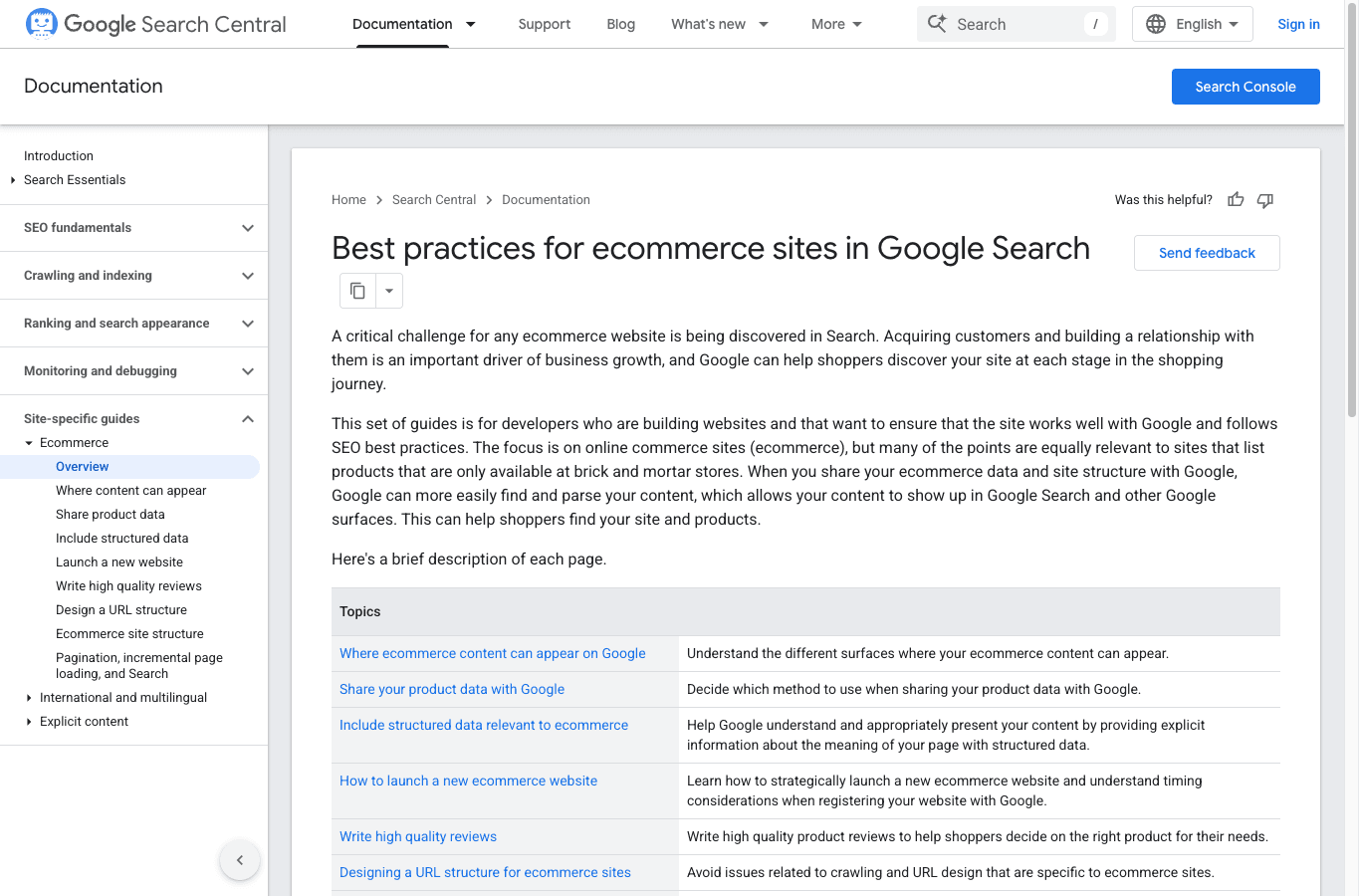
A product reachable only through an internal search box, a button event or an unlinked filter state may have weak discovery paths. Google recommends ordinary crawlable links from menus through categories and subcategories to products. The technical ecommerce SEO guide owns the deeper response, rendering and index diagnosis.
Product facts disagree across the store and Google
A customer may see one price or availability state while Product structured data or a Merchant Center feed sends another. Ecommerce SEO includes this consistency problem because the same product entity is being described through several surfaces. Supported markup can create eligibility for product experiences; it cannot guarantee display or ranking.
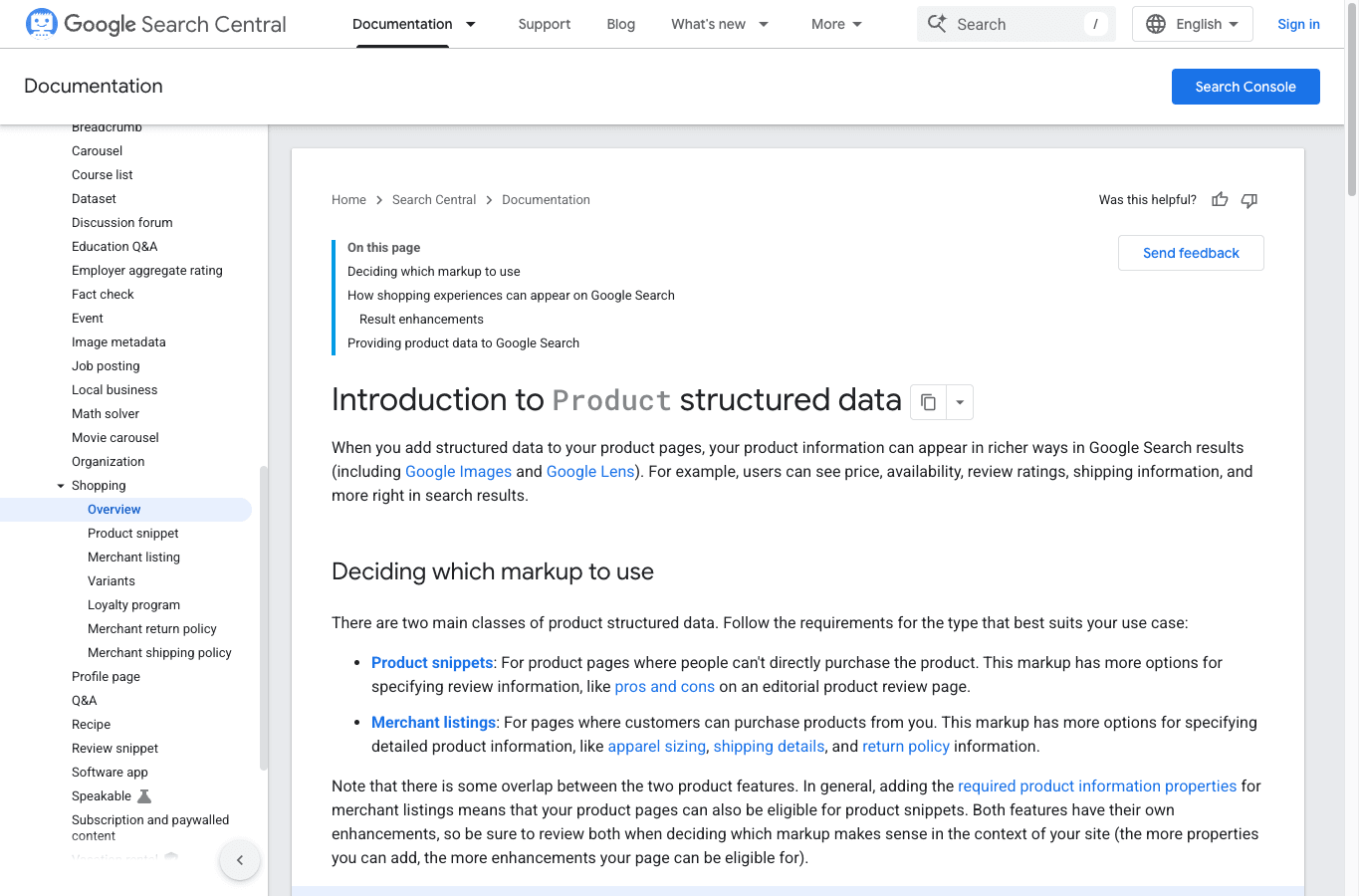
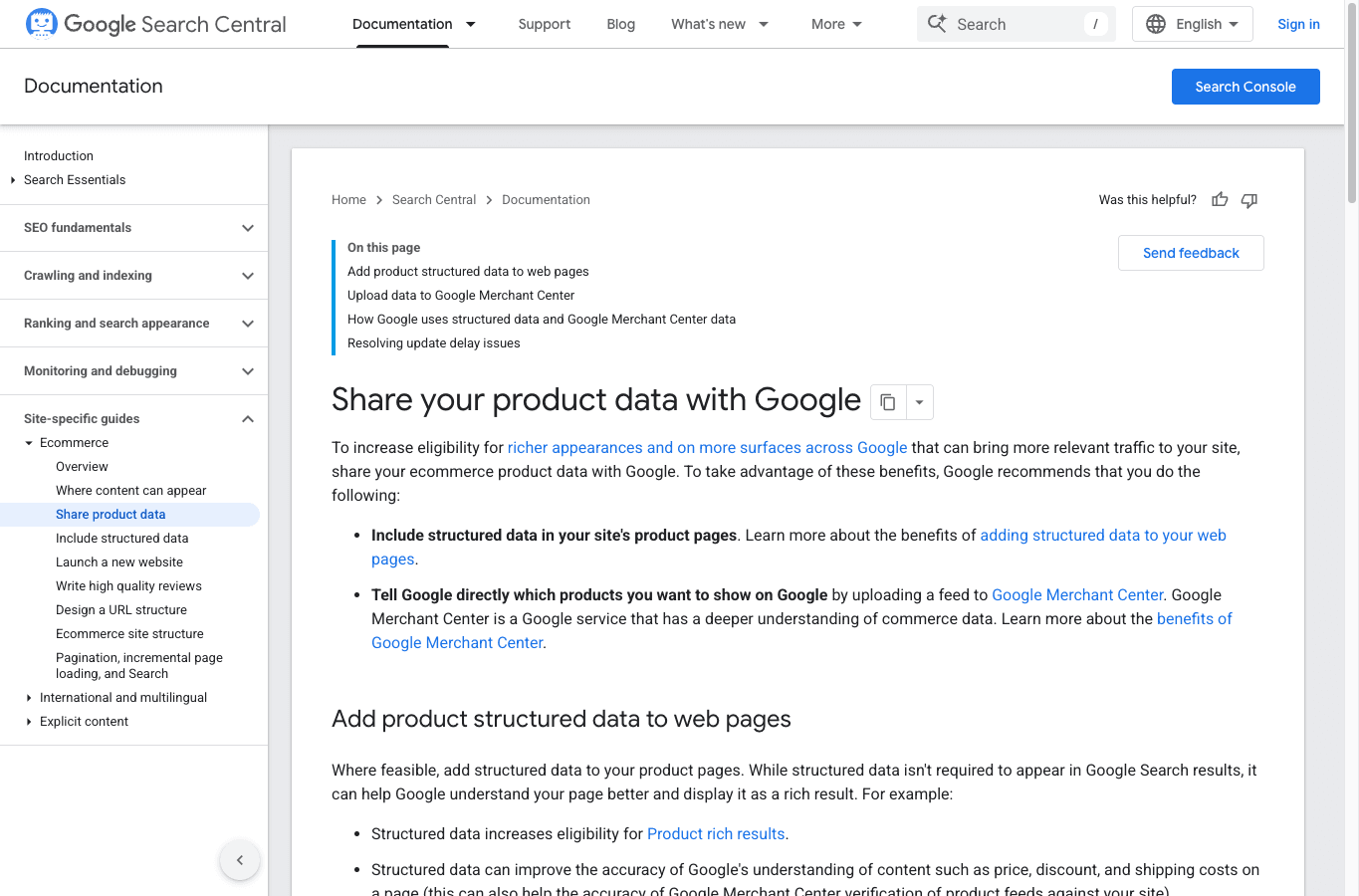
The ecommerce schema guide covers implementation. At definition level, the rule is simpler: visible facts, structured information and transmitted product data should describe the same current offer.
Supporting content earns visits but has no commercial relationship
A guide can answer a real question and still leave the reader disconnected from the relevant category or product. That is not automatically a traffic failure. It can be a relationship failure: the supporting page has no clear commercial owner, or its links do not continue the customer’s task.
Search clicks, site sessions and orders tell different stories
Search Console records search visibility and clicks. Analytics observes website sessions under its own collection and consent model, while the order system records transactions. Ecommerce SEO measurement keeps those definitions separate before claiming that a search change caused a commercial result.
These symptoms belong to the same system, but they do not demand the same first fix. Use the ecommerce SEO checklist when you need release controls. Use the strategy guide when the store needs sequencing and priorities.
Ecommerce SEO terms that are easy to confuse
Online stores reuse similar words for different objects. Keeping the distinctions clear prevents a technical or content recommendation from targeting the wrong thing.
| Term pair | Practical distinction |
|---|---|
| Product and offer | The product is the item being described. An offer is the purchasable price, currency, condition and availability presented by a seller. |
| Category and collection | A category usually represents a durable product set in the store taxonomy. A collection can be durable too, but stores also use collections for campaigns or merchandising groups. |
| Product and variant | A product can group purchasable choices such as size or colour. Whether a variant needs its own searchable page depends on the store’s URL model, customer decision and maintained content. |
| Onsite search and a search engine | Onsite search helps visitors find items after entering the store. Google Search discovers and evaluates web pages; an internal search box does not replace crawlable catalogue links. |
| Structured data and product feed | Structured data describes supported facts in the web page. A product feed sends selected catalogue fields to another system such as Merchant Center. The two channels can complement one another. |
| Owned result and marketplace listing | An owned result leads to the brand’s website. A marketplace listing belongs to the marketplace environment and follows that platform’s controls. |
These distinctions also clarify ownership. Merchandising may control the product set, commerce operations may own the offer, and development may control how both appear in the rendered page. Ecommerce SEO checks whether those sources create one coherent search-facing object.
Owned-store SEO, marketplace ranking and paid search are different
Ecommerce teams often use the same product catalogue across several channels, but the controls are not identical.
- Owned-store SEO concerns the pages and product information on the brand’s website and how they appear in unpaid search experiences.
- Marketplace optimisation concerns listings and performance inside platforms such as Amazon, Flipkart or Meesho. Those platforms control their internal ranking systems.
- Paid search and shopping campaigns buy eligible placement and use campaign controls. Payment does not make the owned page organically relevant.
- Feed management transmits product data to a platform. It supports discovery but does not replace useful, crawlable storefront pages.
- Conversion optimisation improves what users do after arriving. It overlaps with user experience, but it is not a substitute for discoverability or page ownership.
The channels can reinforce one another when product identity and commercial facts agree, but should be measured separately.
What changes for ecommerce SEO in India?
The search principles do not change at the border, but the commercial facts and customer decisions can. For an Indian store, relevant checks may include:
- INR and tax presentation;
- pincode serviceability;
- cash on delivery where it is genuinely offered;
- delivery estimates and return conditions;
- pack size, warranty and regional availability;
- language versions when the business maintains them; and
- whether an offer belongs to the owned store or a marketplace seller.
These are not keywords to add mechanically. They are facts that must remain accurate across category pages, product pages, structured data, feeds, cart and checkout. A store that does not offer cash on delivery should not create content implying that it does.
Does ecommerce SEO also help AI search?
Traditional search and AI discovery share important foundations: accessible pages, stable entities, consistent product facts, supported claims and clear relationships between categories, products and guides. Improving those foundations can make a store easier for machines to interpret.
The measurement is different. Organic search can be reviewed through landing-page and query data. AI platforms may mention, cite or recommend sources in ways the store does not control, and no schema type, prompt tactic or content format guarantees inclusion. Treat AI visibility as an additional observation layer, not a replacement for Google SEO or a promise attached to every page.
What ecommerce SEO is not
Ecommerce SEO is not:
- adding a plugin and assuming the store is optimised;
- inserting the same keywords into every title or description;
- paying for a shopping ad;
- controlling how a marketplace ranks its sellers;
- marking up unsupported facts with schema;
- completing a one-time audit without implementation; or
- guaranteeing rankings, traffic, revenue or AI citations.
An audit diagnoses constraints. A strategy chooses priorities. A checklist verifies releases. Ecommerce SEO is the continuing system that connects all three to the live store.
Choose the right next step
- Start with the ecommerce SEO strategy when page groups and priorities are unclear.
- Use the ecommerce SEO checklist before a release ships.
- Resolve unclear category ownership with the category page SEO guide.
- Review inconsistent product identity or content in the product page SEO guide.
- Open the technical ecommerce SEO guide when crawling, rendering or index signals conflict.
- Compare visible facts, JSON-LD and feeds with the ecommerce schema guide.
Ecommerce SEO FAQs
Can I do ecommerce SEO myself?
You can map a small catalogue, inspect page ownership, improve navigation and content, and review basic search data. Specialist help becomes useful when templates affect many URLs, JavaScript changes rendered output, facets create large URL spaces, migrations are planned or several data systems disagree.
What should a beginner learn first?
Learn how customer searches map to category and product pages, then to the content that supports them. Next, learn how ordinary links and responses work with canonicals or index states to determine which pages can be discovered. Tools are easier to use once those relationships are clear.
Can ChatGPT do ecommerce SEO?
ChatGPT can help classify tasks and draft copy. It can also run checks or analysis when it receives accurate inputs. It cannot verify a live store, approve product claims or guarantee rankings by itself. Human owners still need to validate commercial facts, technical output and measured results.
How do you measure ecommerce SEO?
Review query and landing-page performance in Search Console, then connect organic landing sessions to analytics and order data with aligned definitions. Segment category pages from products, then separate both from supporting pages so changes are not hidden inside one sitewide total.
How long does ecommerce SEO take?
There is no reliable universal timeline. Catalogue size, technical constraints, competition, release speed and the starting state all affect when a measurable change may appear. Define the page group, evidence and comparison window before setting an expectation.